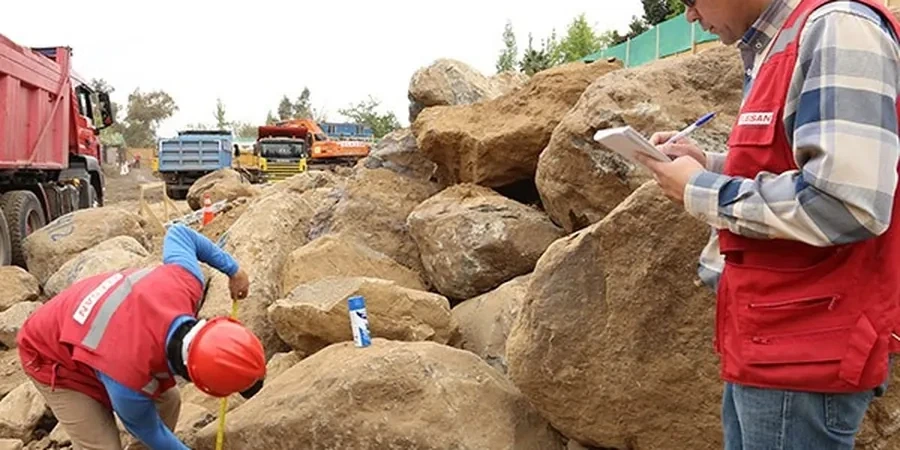
Newcastle’s coastal bench, perched between the Tasman Sea and the Hunter River floodplain, catches the brunt of easterly storms that saturate the near surface and drive pore pressure into residual clay profiles. The Merewether Scarp alone has slipped more than once, reminding every developer that a standard bore log is not a soil mechanics study — it is a forensic reading of stress history, saturation ratio, and post-mining relaxation that tells you whether the ground will hold. We see it in Bar Beach condos where salt spray accelerates weathering in the upper Hawkesbury Sandstone, and out near Wallsend where old colliery voids still breathe moisture into the overburden. Between the coal measure bedrock and the Quaternary coastal sands, Newcastle demands a soil mechanics framework that reconciles rapid urban consolidation with a landscape that never quite settled after the '89 quake shook its joints loose.
Between the Merewether Scarp's colluvial creep and the Hunter floodplain's compressible clays, a soil mechanics study in Newcastle is less about finding refusal and more about reading the water.
Scope of work
A five-storey mixed-use block going up near the Darby Street café strip taught us this: the bore log showed competent sandstone from four metres down, but the lab’s triaxial series on the residual clay above it revealed a collapse potential of nearly 3.5 percent under wetting — the kind of number that turns a slab-on-grade into a litigation headache within two wet seasons. The geologist on site ran a MASW profile to confirm the shear-wave velocity contrast at the fill–residual interface, and we backed it with an oedometer campaign that mapped the heave-settlement envelope for every lift. That project ended up with a stiffened raft design that cost the developer an extra forty grand but saved the podium carpark from becoming a swimming pool. Newcastle’s soil horizons do not forgive shortcuts: the Permian coal measures can present a competent roof that masks a fractured seam beneath, while the Nobbys tuff beds weather into a low-plasticity silt that loses structure the moment it is exposed to an open excavation. Our lab runs Atterberg limits on every sample before anyone signs off a footing depth, and we cross-check the SPT refusal with a core barrel run whenever the blow count jumps above fifty — because in this city, a hard rebound can be either a cemented sand lens or a buried boulder train from the Glenrock Lagoon paleochannel.
Standards used
AS 1726:2017 — Geotechnical Site Investigations, AS 4678:2002 — Earth-Retaining Structures (relevant for basal stability and soil–structure interaction), AS 1289 suite — Soil Testing Methods (compaction, classification, strength, consolidation), AS 1170.4:2007 — Structural Design Actions: Earthquake Actions in Australia (site subsoil classification), ISO 17025:2017 — General requirements for the competence of testing and calibration laboratories
FAQ
What does a soil mechanics study cost for a typical residential lot in Newcastle?
For a single-dwelling lot in suburbs like Merewether, Lambton, or Kotara, the study typically runs between AU$5,090 and AU$8,740 depending on the number of boreholes, lab testing scope, and whether a seismic site classification is required. Sites with known mine subsidence or steep slopes will sit at the upper end because of the extra CPT or pressuremeter runs.
How deep do you usually investigate for a Newcastle CBD development?
It depends on the foundation type and the bedrock profile. In the Hunter Street–Honeysuckle corridor, we typically extend CPT soundings to 25–30 metres to capture the paleochannel sands, and supplement with a core hole into the top of the Hawkesbury Sandstone for unconfined compressive strength. For a deep excavation with a basement, the investigation must go at least twice the excavation depth below the base to check for basal heave.
Is a soil mechanics study mandatory before lodging a development application in the Newcastle LGA?
The City of Newcastle’s DCP requires a geotechnical investigation for any structure that exceeds a single dwelling or is located on land steeper than 10 degrees, within a mine subsidence district, or on a flood-prone lot. Even where it is not strictly mandatory, most structural engineers and certifiers will not sign off on footing designs without a soil mechanics study that meets AS 1726.
How long does the investigation and reporting process take in Newcastle?
Fieldwork on a standard residential or low-rise commercial site can be completed in one to two days. The lab programme — particularly consolidation and triaxial testing — needs another two to three weeks for the full time-dependent data. We usually deliver the interpretive report within four weeks of mobilisation, although we can fast-track the factual data for urgent DA deadlines.