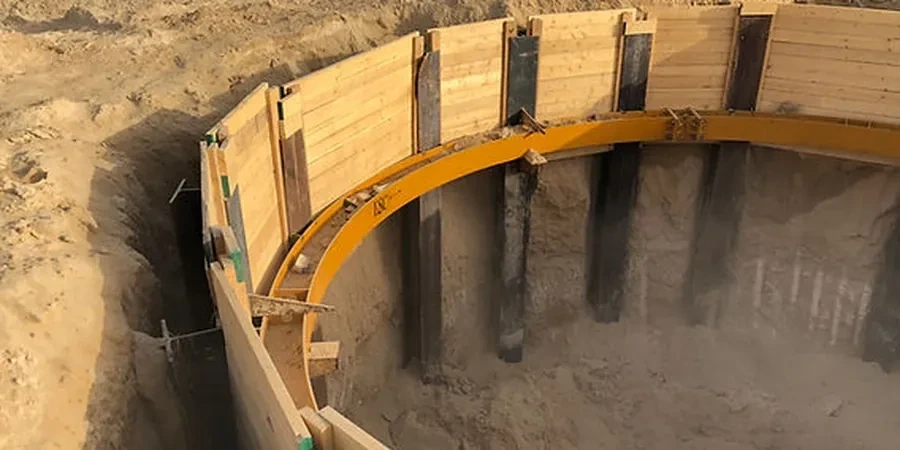
A recent project on a sloping site near Merewether Heights required a complete rethink of the foundation strategy when the initial boreholes hit extremely variable residual siltstone at just four metres. The structural loads from a five-level apartment block would have overwhelmed a conventional footing, and the steep grade meant differential settlement was a real threat. This scenario repeats itself across Newcastle’s eastern suburbs and the Hunter Valley fringe, where the near-surface geology shifts from dense sands to highly weathered coal measures within a span of fifty metres. In our practice, pile foundation design becomes the central conversation when the bearing stratum is deep, the seismic demand is high, or the site sits within a known mine subsidence district. Newcastle’s AS 1170.4 hazard factor of 0.11, combined with its proximity to the Hunter Fault, adds a lateral-load dimension that simply cannot be ignored. When we begin a deep foundation job here, the first step is always correlating the geotechnical model with the specific pile type—driven, bored, or CFA—before running the axial and lateral analyses. We often integrate the findings from a CPT test to refine the soil layering, particularly where the transition between estuarine clays and residual rock is abrupt and critical for toe level selection.
A pile in Newcastle is not just a load-transfer element; it is a seismic fuse that must absorb lateral displacement while maintaining axial stiffness across highly variable rockhead depths.
Area-specific notes
The most damaging shortcut we see in the region is designing piles to a presumed uniform rockhead level without drilling through the coal seams to competent base material. A terminated pile sitting on a thin coal band within the Newcastle Coal Measures can experience sudden settlement when the seam compresses under load, or worse, when mine voids from legacy workings collapse. Another frequent error is underestimating the downdrag forces in areas with recent fill placement, such as the Honeysuckle redevelopment zone—negative skin friction adds an axial demand that the structural section must resist, and ignoring it leads to cracking in the pile cap. The Hunter Fault system, though not producing large-magnitude events daily, imposes a kinematic demand that requires ductile detailing of the pile-to-cap connection. A pile design that only checks axial compression and neglects lateral spreading potential in the estuarine clays of Throsby Creek is essentially incomplete. We mitigate these risks by specifying full-length reinforcement cages in the upper liquefiable zone and by running sensitivity analyses on the undrained shear strength of the cohesive layers.
FAQ
What is the typical depth of piles in Newcastle for a residential apartment building?
In our experience across the city, piles for medium-rise residential structures usually range from eight to twenty-five metres, depending on the depth to competent rock within the Newcastle Coal Measures. Sites near the coast, where sands overlie the rock, may require shorter piles than hillside sites with colluvial cover.
How does the mine subsidence risk affect pile foundation design in Newcastle?
The presence of historical mine workings in the Newcastle Coal Measures requires a subsidence assessment as part of the investigation. We design the pile reinforcement to accommodate curvature induced by subsidence troughs and specify a socket length that ensures the pile tip is founded below the zone of potential void migration, as recommended by the Subsidence Advisory NSW guidelines.
What is the estimated cost for a pile foundation design package for a project in Newcastle?
For a typical residential or light commercial project in Newcastle, the pile foundation design package, including geotechnical interpretation and the full design report, generally falls between AU$2,250 and AU$10,740, depending on the number of piles and the complexity of the seismic analysis required.
Which load combinations does AS 2159 require for the seismic design of piles in Newcastle?
AS 2159, in conjunction with AS 1170.4, requires the pile to be checked for the earthquake load combination including the inertial forces from the superstructure and the kinematic soil movement. In Newcastle, the hazard factor of 0.11 means the seismic action is moderate, but the kinematic bending at the interface between soft clay and stiff rock still governs the design in many cases.