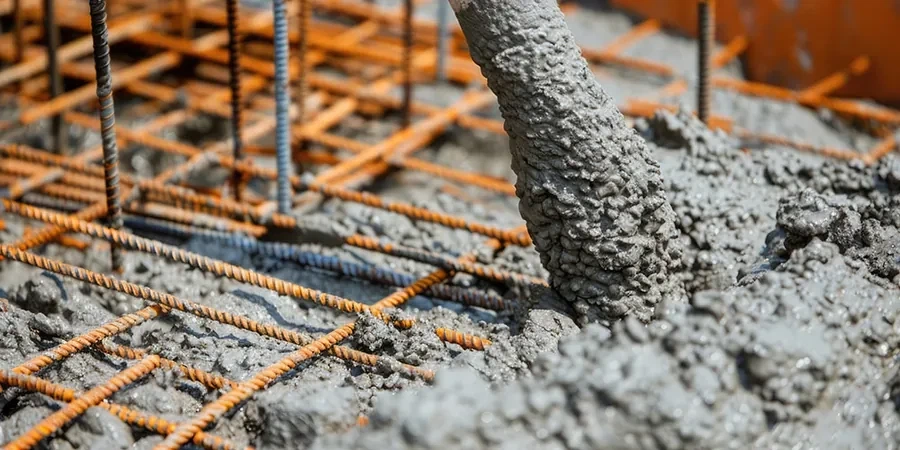
Foundations are the critical interface between any structure and the ground beneath it, responsible for transferring all loads safely into the earth while resisting movement, settlement, and environmental forces. In Newcastle NSW, this discipline takes on particular significance due to the city's complex geological history and its position within the seismically sensitive Hunter Region. Whether for a single-storey residential dwelling in Merewether, a multi-level commercial development in the Newcastle CBD, or industrial infrastructure at the Port of Newcastle, the foundation system must be designed to suit not only the structural loads but also the specific ground conditions encountered on site. A poorly conceived or under-designed foundation can lead to differential settlement, cracking, structural distress, or even catastrophic failure, making professional geotechnical input essential from the earliest planning stages.
Newcastle's geology is famously varied, shaped by the Permian coal measures that underlie much of the region, interspersed with residual soils derived from sandstone, siltstone, and conglomerate of the Newcastle Coal Measures. The coastal fringe and inner suburbs often feature shallow rock or stiff clays, but many areas present challenging reactive clay soils that swell and shrink dramatically with moisture changes. The legacy of underground coal mining adds another layer of complexity: unmapped workings, mine subsidence zones, and abandoned shafts can create voids or zones of weakened ground that demand specialised foundation solutions. The Mine Subsidence Board of NSW imposes strict requirements in declared districts, and a foundation design that ignores this reality risks not only structural damage but also refusal of building approval. Sites near the Hunter River and its tributaries may also encounter alluvial deposits, soft silts, or loose sands requiring deep foundation alternatives.
All foundation works in Australia must comply with the National Construction Code (NCC), which references Australian Standards including AS 2870 for residential slabs and footings, AS 2159 for piling design and installation, and AS 3600 for concrete structures. In Newcastle, the relevant local council—City of Newcastle—administers development applications and can impose additional conditions based on geotechnical reports, particularly in mine subsidence districts, flood-prone land, or areas mapped as having high soil reactivity. A site investigation to AS 1726 is typically the first step, involving boreholes, test pits, and laboratory testing to characterise the ground profile and inform foundation selection. For larger projects, a detailed geotechnical report must accompany the structural drawings, and the design must demonstrate compliance with the limit state principles of strength and serviceability defined in AS 2159 and AS 2870.
The types of projects requiring engineered foundations in Newcastle span the full spectrum of construction. Residential developments on reactive clay sites often demand stiffened raft slabs or pile foundation design where ground movement exceeds tolerable limits. Medium-rise commercial buildings and apartment blocks in the city centre frequently require bored piers or driven piles to reach competent rock, especially where basement excavations remove overburden. Industrial facilities, retaining walls, bridges, and wharf structures all impose unique demands—high vertical loads, lateral forces, or dynamic machinery—that dictate the choice between shallow footings and deep piles. Even minor structures like fences and carports can fail if their footings are not designed for the local soil reactivity, highlighting the universal importance of geotechnical input across all project scales.
The two broad categories are shallow foundations (pad footings, strip footings, and raft slabs) and deep foundations (driven piles, bored piers, and screw piles). The choice depends on soil strength, reactivity, depth to rock, and structural loads. In Newcastle, stiffened rafts are common for residential slabs on reactive clays, while deep piles are often required for larger structures or sites with mine subsidence risk, soft alluvial soils, or where high lateral loads must be resisted.
Much of Newcastle lies within Mine Subsidence Districts, where historical underground coal mining has left voids and fractured rock at depth. Foundations in these zones must be designed to tolerate potential ground movement, often requiring deep pile systems that bypass the subsidence-affected strata and socket into competent rock. The Mine Subsidence Board NSW imposes specific requirements, and builders must obtain a subsidence advisory before construction, which can dictate foundation type and reinforcement detailing.
A geotechnical investigation, conducted to AS 1726, identifies the soil and rock profile, groundwater conditions, and engineering properties of the ground at a site. It provides the data needed to assess bearing capacity, settlement, soil reactivity, and potential hazards such as acid sulfate soils or aggressive groundwater. Without this investigation, foundation design is speculative and risks non-compliance with the NCC and Australian Standards, potentially leading to structural failure or costly remediation.
Reactive clays expand when wet and shrink when dry, causing ground movement that can crack slabs and damage brickwork. AS 2870 classifies sites based on reactivity, and in Newcastle's H1 and H2 class sites, standard waffle raft slabs may need stiffening beams or deeper edge beams. In extreme cases, a suspended slab on piles is required to isolate the structure from ground movement, ensuring long-term stability and compliance with warranty requirements.
We serve projects across Newcastle NSW and surrounding areas.