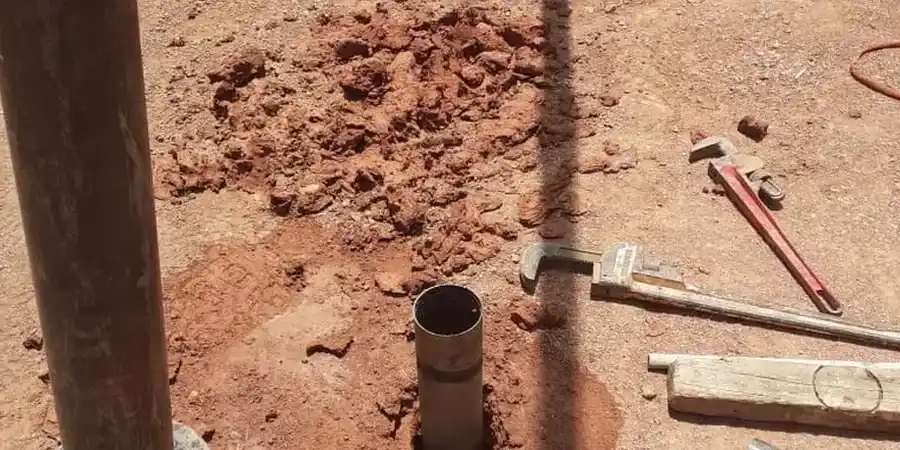
In-situ testing forms the backbone of reliable geotechnical assessment across Newcastle, NSW, providing engineers with direct measurements of soil and rock properties without disturbing the natural state of the ground. This category encompasses a wide range of field-based investigations, from strength and stiffness evaluations to permeability and density determinations, all performed on site to capture conditions that laboratory samples often fail to replicate. In a region where varied geology and a history of mining influence development, the value of accurate in-situ data cannot be overstated. Whether assessing foundation bearing capacity, slope stability, or compaction quality, these methods deliver immediate, representative results that drive safer and more economical design decisions.
Newcastle's geological setting presents unique challenges that make in-situ testing indispensable. The city sits on the northern margin of the Sydney Basin, underlain by Permian coal measures of the Newcastle Coal Field, interbedded with sandstone, siltstone, and conglomerate. Superficial deposits include residual soils, alluvium along the Hunter River floodplain, and Aeolian sands in coastal suburbs. This diversity means ground conditions can shift dramatically within a single site, from dense sands in beachside locations to soft, compressible clays in low-lying areas. In-situ methods such as cone penetration testing and pressuremeter tests adapt to these transitions, capturing data across soil interfaces that borehole sampling alone might miss. Understanding local groundwater behaviour, influenced by tidal fluctuations and abandoned mine workings, further underscores the need for field-based permeability and piezocone assessments.
Compliance with Australian Standards governs all in-situ activities in Newcastle, ensuring consistency and reliability. AS 1289 sets out the methods for soil testing, including the widely used field density test (sand cone method) for compaction control. AS 1726 provides the framework for geotechnical site investigations, specifying how in-situ tests integrate with broader subsurface exploration. For projects involving deep foundations or slope assessments, AS 2159 and AS 4678 reference the role of pressuremeter and shear vane testing in deriving design parameters. Local councils, including City of Newcastle, typically require adherence to these standards as part of development applications, particularly where fill placement, retaining structures, or excavation near existing infrastructure is proposed. The NSW Environment Protection Authority also mandates specific in-situ permeability testing for contamination assessments under the Contaminated Land Management Act.
The types of projects driving demand for in-situ testing across Newcastle are diverse and growing. Residential subdivisions on the city's fringe require rigorous compaction verification through nuclear gauge and sand cone methods to meet AS 3798 earthworks specifications. Medium-rise commercial developments in the CBD rely on pressuremeter and dilatometer testing to refine foundation designs in variable residual soils. Infrastructure works, including the Newcastle Inner City Bypass and port expansion projects, demand large-scale cone penetration testing programs to map subsurface conditions along linear routes. Mine subsidence investigations across former colliery areas use in-situ stress measurements and seismic methods to assess ongoing ground movement risks. Even smaller projects, such as granny flat construction or retaining wall installations, benefit from dynamic cone penetrometer tests to quickly evaluate near-surface strength without mobilising larger rigs.
In-situ testing measures soil and rock properties in their natural state, preserving stress conditions, moisture content, and fabric that are altered during sampling and transport. Laboratory tests on extracted samples provide controlled conditions but may not reflect field behaviour. In Newcastle's variable geology, combining both methods gives engineers the most complete picture, with in-situ tests excelling at capturing continuous profiles and identifying layering that discrete samples might miss.
AS 1289 covers most soil field testing methods, including density, penetration resistance, and permeability. AS 1726 outlines requirements for geotechnical site investigations, integrating in-situ tests into the broader scope. For specific applications, AS 3798 addresses earthworks compaction control, while AS 2159 and AS 4678 reference in-situ strength testing for pile and retaining wall design. Local council development conditions typically mandate compliance with these standards.
The region's diverse subsurface, from coastal sands to Hunter River alluvium and Permian coal measures, demands adaptable in-situ techniques. Soft clays may require vane shear testing for undrained strength, while dense sands suit cone penetration testing for continuous profiling. Areas with shallow rock or mine workings might need pressuremeter testing to assess stiffness. A site-specific strategy, guided by desktop geology reviews, ensures the selected methods target the relevant parameters for design.
In-situ density testing is mandatory for controlled fills under AS 3798, typically during residential subdivisions, road embankments, and commercial pad construction. Council development approvals often specify minimum compaction levels verified by nuclear gauge or sand cone methods. Testing frequency depends on fill volume and layer thickness, with results compared to laboratory reference densities. This ensures long-term stability and minimises settlement in Newcastle's variable soil profiles.
We serve projects across Newcastle NSW and surrounding areas.