← Home · Laboratory

Atterberg Limits Testing in Newcastle NSW

Together, we solve the challenges of tomorrow.

EXPLORE →

In Newcastle, the ground never quite behaves the way a textbook says it should. You dig into what looks like a stiff clay from the Newcastle Coal Measures, and after three days of rain it turns into a sticky mess that clogs a dozer blade. That is where Atterberg limits stop being just numbers on a borelog. We run them early because the difference between a CL and a CH here can mean the difference between a standard pad footing and a full pier-and-beam system punching down to rock. Our lab sees samples from Merewether to Beresfield, and the liquid limit rarely lands where you would guess. The test itself follows AS 1289.3.1.1 and AS 1289.3.3.1, but the real value is interpreting it against local stratigraphy: the Permian tuffaceous clays, the estuarine muds around the Hunter River flats, and the deeply weathered residual profiles along the ridgelines.

A plasticity index above 30 in Newcastle Coal Measures mudstone is a red flag for shrink-swell; it changes the foundation design before the first structural drawing is finished.

Scope of work

Geologically, Newcastle sits on a patchwork of the Newcastle Coal Measures, the Maitland Group, and quaternary alluvium along the Hunter floodplain. In our experience, the residual clays derived from tuff and siltstone weathering often plot high on the Casagrande chart, with liquid limits pushing past 65% and plastic limits around 25%. That means high shrinkage potential and low bearing when wet. For roadwork through the western growth corridors, we routinely pair Atterberg limits with Proctor compaction to nail down moisture-density curves, because a couple of percent off optimum here and you are remoulding a subgrade that will heave in the first wet season. The coal measures mudstones are notorious for slaking when exposed. So the plasticity index becomes a first-pass screening tool: if it is above 30, we flag it for swell testing and usually recommend a capping layer or lime stabilisation before any pavement goes down.
Atterberg Limits Testing in Newcastle NSW
Technical reference image — Newcastle NSW

Area-specific notes

A few years back, a warehouse slab near Hexham showed hairline cracks within six months of handover. The borelogs had classified the soil as a silty clay with a PI of 12 — benign on paper. But the Atterberg tests had been run on bag samples that dried out during transport. When we resampled and tested within 24 hours, the PI came back at 34. The soil had been remoulded during bulk earthworks and lost all memory of its in-situ structure. That is the trap with Newcastle's quaternary alluvium: it looks like a low-plasticity silt when dry, but it is actually a high-plasticity clay with enough silt to mask the behaviour until it gets wet. If the PI is underestimated, the pavement design modulus is wrong, the shrinkage index is wrong, and the slab reinforcement is too light. In expansive clay zones, we also recommend running sand cone density during compaction QA, because a density test without a PI context gives a false sense of security.

Need a geotechnical assessment?

Reply within 24h.

Email: contact@geotechnicalengineering1.co

Technical parameters

ParameterTypical value
Test standardAS 1289.3.1.1, AS 1289.3.3.1
Parameters measuredLiquid Limit (LL), Plastic Limit (PL), Plasticity Index (PI), Linear Shrinkage
Sample preparationOven-dried, sieved through 425 µm; wet prep for high-organic clays
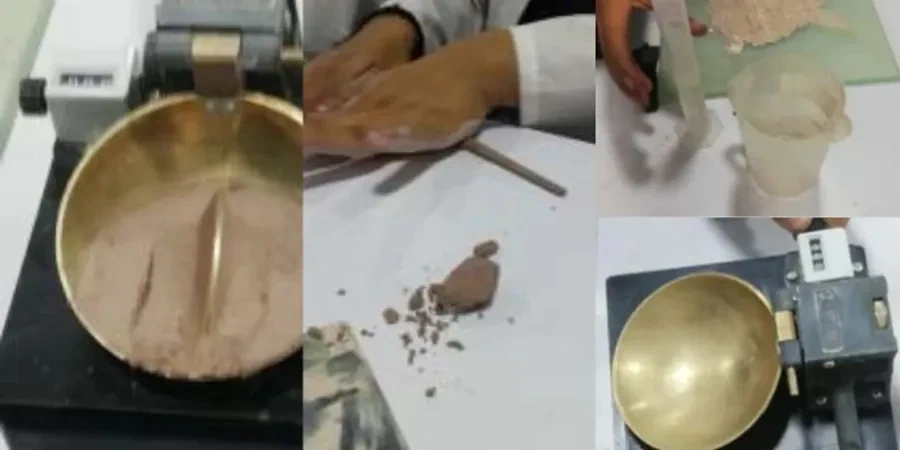
LL methodCasagrande cup (mechanical) with multipoint determination (4 blows range 15-35)
PL method3 mm thread rolling on glass plate; AS 1289.3.3.1
Typical Newcastle PL range (tuff-derived clay)22–28%
Typical Newcastle LL range (estuarine muds)55–90%
ReportingPI, liquidity index, USCS classification, Casagrande chart plot

Linked services

01

Liquid & Plastic Limit (AS 1289)

Full multipoint liquid limit by Casagrande cup plus plastic limit by thread-rolling. Includes PI calculation, liquidity index and USCS classification.

02

Linear Shrinkage & Shrinkage Index

Bar test for linear shrinkage on remoulded soil, used as a direct input to AS 2870 site classification for reactive clay sites.

03

Moisture Content & Liquidity Index Profiling

Depth-specific moisture content determination paired with Atterberg limits to calculate liquidity index; critical for assessing normally consolidated versus overconsolidated behaviour in Hunter River clays.

04

Correlation with Particle Size Distribution

Atterberg limits combined with hydrometer and sieve analysis to build a full USCS classification, particularly for mixed soils with high silt fractions.

Standards used

AS 1289.3.1.1: Soil classification tests — Determination of the liquid limit of a soil — Four-point Casagrande method, AS 1289.3.3.1: Determination of the plastic limit of a soil — Standard method, AS 1726: Geotechnical site investigations, AS 4678: Earth-retaining structures (PI used for backfill selection), AS/NZS 1170: Structural design actions (indirectly via site classification)

FAQ

How much does Atterberg limits testing cost in Newcastle?

For a standard liquid limit and plastic limit pair with plasticity index and USCS classification, budget between AU$100 and AU$170 per sample, depending on the number of samples in the batch and whether linear shrinkage is included. Express same-day results carry a small surcharge.

What is the minimum sample mass needed for an Atterberg test?

We need about 300 grams of material passing the 425 µm sieve. For a disturbed bag sample from a borehole or test pit, a 1 kg bag gives plenty of margin. If the soil is very sandy, we may need more to obtain enough fines after sieving.

How do Newcastle's coal measure clays affect the plasticity index?

The tuffaceous and mudstone-derived clays in the Newcastle Coal Measures often produce liquid limits between 50 and 75 percent and plastic limits around 22 to 28 percent, yielding plasticity indices above 30. That classifies them as high-plasticity clays (CH) with significant shrink-swell potential, which directly influences footing depth and pavement design per AS 2870.
Location and service area

We serve projects across Newcastle NSW and its metropolitan area.

View larger map
dy>