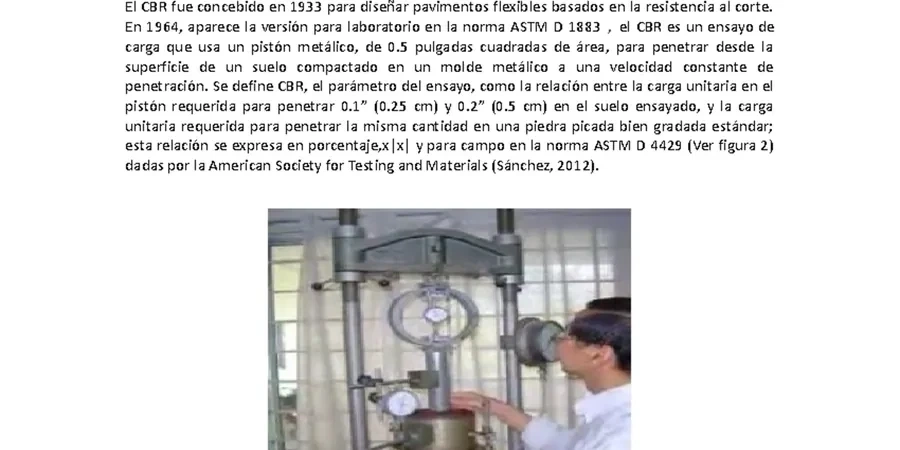
Newcastle's geology can be unpredictable. One site sits on Hawkesbury Sandstone, the next is deep in reactive clays or coal seam alluvium. When we run a laboratory CBR test, the sample preparation often tells us more about the local ground than the client expects. The saturated CBR value, in particular, can drop dramatically if the subgrade contains dispersive clays common to the Hunter Valley. We see this pattern regularly in projects around Wallsend and the Lake Macquarie fringe, where pavement failures trace back to optimistic soaked CBR assumptions. Before cutting a single fill lift, it is worth looking at complementary data from a grain size test to confirm fines content, or an Atterberg limits evaluation to gauge plasticity, both of which feed directly into the empirical pavement thickness design charts. The soaked CBR we deliver is not just a number; it is a direct reflection of how the subgrade will behave after heavy rainfall, which in Newcastle can arrive with little warning.
In Newcastle's reactive clays, the soaked CBR often drops below 3%—a detail that can double the required pavement thickness if overlooked during the design phase.
Area-specific notes
The post-war expansion of Newcastle's suburbs pushed development onto low-lying coastal plains and reclaimed mining land, particularly around Mayfield, Carrington, and parts of Kotara. Many of these areas have a legacy of uncontrolled fill, ash deposits, or highly compressible estuarine clays. When a laboratory CBR test is run on a bulk sample from these zones without recognising the fill's heterogeneity, the result can be dangerously misleading. We have seen cases where a single CBR value of 12% was used for a subdivision design, only to encounter pockets of saturated ash fill with an effective strength closer to 1.5% during construction. The risk is not just pavement rutting; it is the contractual dispute that follows when the as-constructed subgrade fails proof rolling. A targeted CBR sampling plan, supported by a test pit investigation to log the fill profile, reduces this risk substantially. In Newcastle, where old mine workings and buried service trenches create abrupt changes in subgrade support over short distances, relying on a single CBR value without understanding the site's history is a gamble that rarely pays off.
FAQ
What is the typical turnaround time for a soaked CBR test in Newcastle?
The soaking period alone requires four full days per AS 1289.6.1.1. Adding sample preparation, compaction, penetration testing, and reporting, we typically deliver final results within six to seven working days from sample receipt. Rush requests can be accommodated for an expedited fee.
How much does a laboratory CBR test cost in Newcastle?
A standard soaked CBR test in our Newcastle laboratory generally ranges from AU$180 to AU$350 per specimen, depending on whether standard or modified compactive effort is required and the number of penetration points. Multi-specimen programs for larger projects are priced accordingly.
Can you test both cohesive and granular soils for CBR?
Yes, the CBR method applies to both. Cohesive soils usually require the soaked procedure because moisture sensitivity governs design. Granular materials are often tested unsoaked at optimum moisture content. The sample preparation and surcharge setup differ between the two to match field conditions.
What sample mass do you need for a CBR test from a Newcastle site?
We need approximately 25 kg of representative bulk sample for a single CBR compaction point. If the material contains particles larger than 19 mm, a larger sample may be required to allow for scalping. We supply sample bags and arrange courier pickup across the Newcastle and Lake Macquarie area.