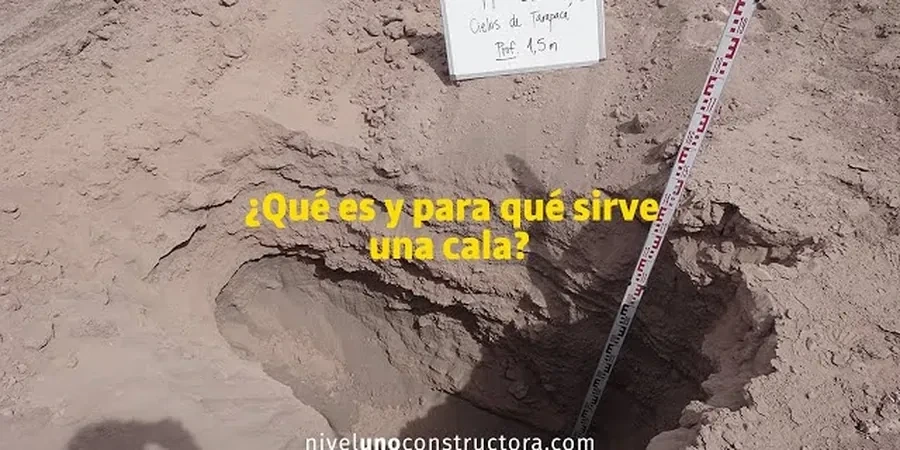
Too many Newcastle builders skip the exploratory test pit and pay for it later. A site in Adamstown Heights looks clean on top, but the excavator bucket hits buried demolition rubble at a metre and a half. The design assumed natural clay. The real profile was uncontrolled fill over weathered Newcastle Coal Measures. That kind of mismatch triggers Variation Orders that nobody budgeted for. A single exploratory test pit, dug to 3–4 metres, would have shown the rubble layer in an hour. We work across the Hunter region and what we keep seeing is old fill, colluvial pockets, and unrecorded service trenches that desktop studies never catch. If you need deeper data below the pit base, we often follow up with SPT drilling to log refusal depth and strength without switching contractors.
An exploratory test pit turns subsurface assumptions into visible evidence, usually within the first two hours on site.
Scope of work
Newcastle’s geology punishes shallow assumptions. The ridge lines around Merewether and The Junction sit on stiff residual clays derived from the Newcastle Coal Measures, but the lower slopes and valley floors are a different story. Coastal humidity and episodic heavy rainfall, like the April 2015 superstorm that dumped over 300 mm in 24 hours, accelerate weathering of near-surface rock and soften the upper clay profile. An exploratory test pit lets you stand in the excavation and log that transition with your own eyes: root zone, desiccated crust, mottled clay, then the first coal seam or tuff band. You measure moisture change with depth, pick up slickensided surfaces that hint at slope creep, and collect disturbed samples for index testing. From our experience, pits on Lambton or New Lambton slopes often reveal colluvium draped over bedrock at less than two metres, a condition that completely changes footing design assumptions.
Area-specific notes
The excavator arrives and the operator starts peeling off the topsoil. On a sloping block in Charlestown, the first cut often exposes fill that was placed thirty years ago without compaction control. We log every bucket pass because the difference between natural colluvium and loose fill dictates whether the footing can stay shallow or must go deep. Confined sites near Hamilton or Islington add another layer of risk: the pit must sit between overhead powerlines, boundary fences, and buried telecoms, all while keeping the batter stable enough for a geologist to enter safely. Safe Work NSW expects a trench shield or battered sides beyond 1.5 metres depth. The exploratory test pit lets us photograph the stratigraphy, measure the fill thickness with a tape, and take bulk samples for laboratory classification, all before the concrete pump even arrives on site.
FAQ
How deep can an exploratory test pit go in Newcastle's soil conditions?
Most pits in the Newcastle area reach 2.5 to 3.5 metres with a standard excavator. We can go to 4.5 metres if access allows a larger machine and the ground stands up. Deeper than 1.5 metres requires shoring or a stepped batter under NSW safety rules, and we stop if we hit rock that the bucket cannot break. For depths beyond four metres, we recommend switching to a borehole.
Do I need council approval for an exploratory test pit?
In most cases within the City of Newcastle LGA, geotechnical investigation pits do not require a DA. They are classified as exempt development under the State Environmental Planning Policy (Exempt and Complying Development Codes) 2008, provided you reinstate the ground afterwards. We always check Dial Before You Dig records and handle the backfill and surface restoration as part of the job.
What does an exploratory test pit cost in Newcastle?
For a standard pit to 3.0 metres depth, with logging, sampling, and a summary report, budget between AU$850 and AU$1,210 per pit. The final figure depends on access constraints, traffic management if the pit is near the road, and whether we need to arrange a spotter for underground services. Multiple pits on the same day bring the per-pit rate down.
How long does the whole process take, from digging to report?
On-site excavation and logging usually takes two to three hours per pit. We deliver the field log and photos within 24 hours. If laboratory testing is required, the full report with Atterberg limits, particle size distribution, and bearing capacity commentary is typically ready within five working days.