Excavations in Newcastle NSW encompass the full spectrum of earthworks required to create below-ground spaces for infrastructure, residential, and commercial developments. This category covers everything from initial ground investigation and geotechnical design through to execution and real-time monitoring of open-cut and retained excavations. In a city undergoing significant urban renewal and transport expansion, the safe and efficient delivery of excavation works is fundamental to project success. The region's complex geology demands a rigorous, data-driven approach to managing ground behaviour and groundwater, making specialist geotechnical input essential from the earliest planning stages.
Newcastle's geological setting is dominated by the Newcastle Coal Measures, a layered sequence of sandstone, siltstone, shale, and coal seams. These sedimentary rocks are often highly variable in strength and weathering profile, with the upper horizons typically comprising residual clays and colluvium that can be expansive and moisture-sensitive. Of particular concern in deep excavations is the presence of abandoned mine workings, which introduce the risk of subsidence and gas migration. Coastal and harbour-side sites also contend with estuarine sediments and potential acid sulfate soils, requiring careful management of spoil and groundwater. A thorough understanding of these ground conditions is the foundation of any robust excavation strategy, often beginning with targeted geotechnical analysis for soft soil tunnels where tunnelling interfaces with open-cut works.
The regulatory framework governing excavations in NSW is anchored by the Work Health and Safety Regulation 2017 and the excavation work code of practice, which mandate a risk-based approach to preventing ground collapse and managing falls. Any excavation deeper than 1.5 metres requires documented safe work method statements and, where ground conditions warrant, engineered shoring or benching designs. The National Construction Code and relevant Australian Standards, notably AS 4678 for earth-retaining structures and AS 3798 for site investigations, set technical benchmarks for design and execution. In Newcastle, development consent conditions frequently require a geotechnical investigation report and a construction-phase excavation management plan to be approved by council or a principal certifying authority before bulk earthworks commence.
Projects driving demand for specialised excavation services include the Newcastle Light Rail, the expansion of John Hunter Hospital, and numerous high-density residential towers in the Honeysuckle and Wickham precincts. Infrastructure upgrades for Hunter Water and Ausgrid also require deep shaft excavations and trenching in constrained urban corridors. For retained cuts exceeding three metres, the geotechnical design of deep excavations must address wall deflections, strutting loads, and basal stability, often using advanced numerical modelling to simulate staged construction sequences. These designs must integrate with permanent works and consider the influence of vibration and dewatering on adjacent structures, which is where continuous geotechnical excavation monitoring becomes critical to validate design assumptions and trigger contingency measures if movement thresholds are approached.
The primary risks include collapse of unsupported faces in variable residual soils, water ingress from perched aquifers or fractured coal measures, and instability caused by unmapped mine workings. Expansive clays can swell upon unloading, while vibration from rock-breaking near heritage structures requires careful control. A comprehensive ground investigation and risk register are essential before any excavation work commences.
The Work Health and Safety Regulation 2017 requires risk management for all excavations deeper than 1.5 metres. The Safe Work Australia Code of Practice for Excavation Work provides practical guidance on benching, battering, and shoring. Designs for retaining structures must comply with AS 4678, and site investigations should follow AS 3798 to characterise ground conditions adequately.
Support systems range from soldier pile and shotcrete walls in weathered rock to contiguous bored pile walls or secant piles where groundwater control is critical. In the coal measures, rock bolts and mesh are common for competent sandstone faces, while anchored systems may be needed to resist lateral loads in deeper cuts. The choice depends on depth, ground conditions, and adjacent infrastructure sensitivity.
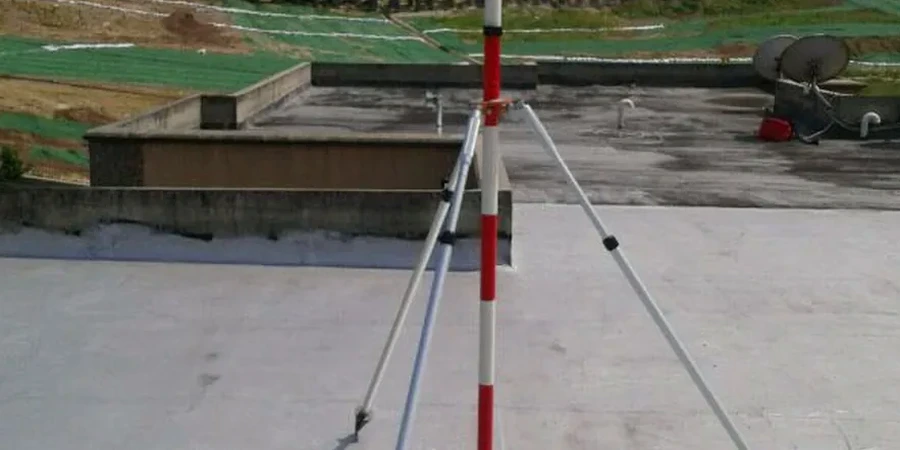
Monitoring provides real-time data on wall deflections, ground settlement, and pore water pressures, allowing engineers to verify design assumptions and detect unsafe trends early. In Newcastle, where old mine workings and variable rockhead levels are common, instrumentation such as inclinometers, piezometers, and survey prisms forms a vital early-warning system that protects workers, the public, and adjacent assets.
We serve projects across Newcastle NSW and surrounding areas.