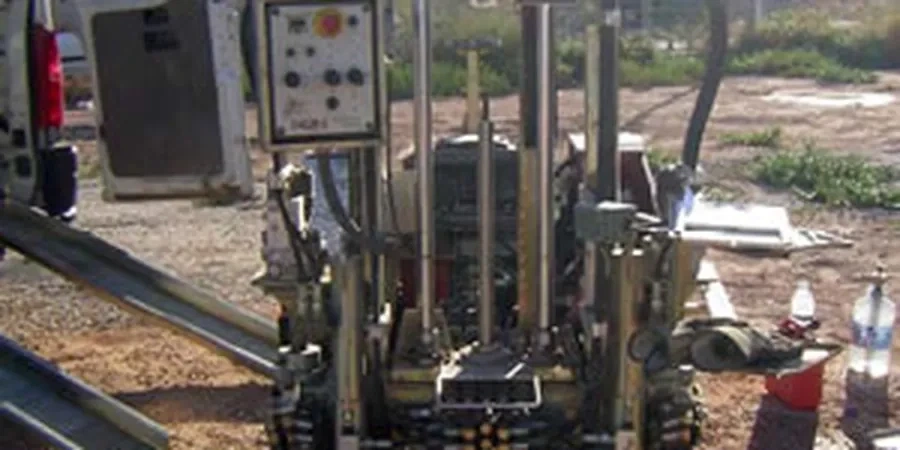
A lot of projects in Newcastle start with a conventional borehole log, but the moment you hit those loose estuarine sands near Throsby Creek or the variably weathered Permian coal measures under Merewether, you want a continuous stratigraphic profile that tells you what\u2019s happening every two centimetres. That\u2019s exactly why we deploy the CPT rig early. With a population pushing 175,000 and a local geology that jumps from Quaternary dune sands at Stockton Bight to indurated tuff and conglomerate the further west you go, a cone penetration test gives us pore pressure dissipation data, tip resistance and sleeve friction in a single push, avoiding the sample disturbance you get with SPT in saturated ground. When ground conditions get complicated, we often pair the CPT with MASW profiling to tie shear-wave velocity to the cone data, particularly where the Newcastle Coal Measures dip steeply and material stiffness changes over very short distances. The CPT is also our go-to for estimating pile end-bearing in the dense sands found beneath the Hunter River floodplain, where we\u2019ve seen refusal depths vary by more than three metres across the width of a single industrial lot.
In Newcastle\u2019s mixed geology, the CPT isn\u2019t just a profiling tool\u2014it\u2019s how we catch the thin soft bands that borehole logs miss.
Scope of work
The coastal humidity and salt-laden air along the Newcastle foreshore don\u2019t just corrode steel\u2014they also influence how quickly pore pressures equalise during a CPT dissipation test, so we\u2019re careful to run extended holds when the friction ratio suggests a clayey silt that might drain slower than expected. In the western suburbs around Wallsend and Minmi, the near-surface clays derived from weathered Newcastle Coal Measures can have plasticity indices above 30%, and the CPT\u2019s piezocone element becomes critical for separating partially drained behaviour from truly undrained response before anyone commits to a bearing capacity calculation. For projects where shallow footings are being considered on these reactive profiles, we often recommend cross-checking the CPT interpretation with
Atterberg limits to confirm the plasticity range and shrink-swell potential. In the deeper alluvial sequences near Hexham, where organic silts and peaty layers appear intermittently, we\u2019ve found that cone resistance alone can mislead you unless you\u2019re also tracking the pore pressure ratio, so every CPT we run includes u2 measurement as standard. On larger Hunter Valley infrastructure jobs, we\u2019ve also combined CPT soundings with
triaxial testing on thin-walled tube samples taken at selected depths, giving us effective stress parameters that calibrate the CPT-based soil behaviour type charts to local materials rather than relying on global correlations that don\u2019t account for the region\u2019s unique Permian lithology.
Area-specific notes
A common mistake we see on Newcastle sites is a developer running a few SPT boreholes and assuming the ground is uniform between them, only to discover during piling that a soft clay lens at seven metres depth\u2014completely invisible in the SPT blow count record\u2014triggers negative skin friction the structural engineer never allowed for. In the Merewether and Bar Beach areas, where residential sites sit on steeply sloping residual soils over rock, we\u2019ve had cases where skipping the CPT led to retaining wall designs that underestimated lateral earth pressures because no one picked up the groundwater perched above the weathered rock interface. The Hunter Valley\u2019s history of underground mining adds another layer of risk: old workings beneath suburbs like Lambton and New Lambton can leave voids or collapsed zones that a single borehole might miss but a CPT refusal signature, combined with a sudden drop in sleeve friction, will flag immediately. When we\u2019re working near known mine subsidence corridors, we don\u2019t treat the CPT as an optional extra\u2014it\u2019s our primary screening tool before any foundation type is locked in.
FAQ
How deep can a CPT rig penetrate in Newcastle\u2019s typical ground conditions?
In the alluvial and dune sands found across much of the Newcastle basin, we routinely reach 15 to 20 metres before encountering refusal. Where the Permian coal measures are near the surface\u2014common in suburbs like Merewether, The Junction and Hamilton South\u2014refusal on weathered rock can occur at less than five metres. We always advise a desktop study of the local geology before quoting a target depth.
What does a CPT test cost for a residential site in Newcastle?
For a standard residential block in the Newcastle area, you\u2019re typically looking at AU$240 to AU$400 per sounding, depending on access, depth required and whether piezocone or a basic friction cone is specified. Mobilisation is quoted separately and depends on distance from our Hunter Valley base.
Can a CPT replace boreholes entirely on a Newcastle project?
It depends on the site. On clean sands and soft clays, a CPT delivers more continuous data than an SPT borehole and often reduces the number of boreholes required. But where you need samples for laboratory strength testing, or where gravels and cobbles are present\u2014as in some paleochannel deposits near the Hunter River\u2014we recommend a combined investigation with at least one borehole to ground-truth the CPT interpretation.
How do you handle mine subsidence areas when interpreting CPT data?
In known subsidence zones under suburbs like Lambton and New Lambton, we look for abrupt changes in cone resistance and sleeve friction that don\u2019t match the natural stratigraphy, as well as zones where the pore pressure response suggests open voids or collapsed material. The CPT data then feeds into a subsidence risk assessment, and we often recommend follow-up with seismic refraction to map the extent of any anomalous zones before foundation design proceeds.