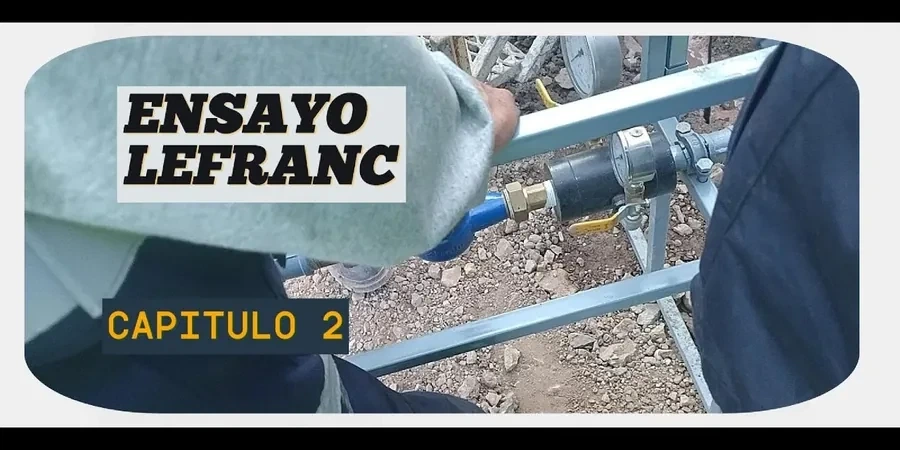
When you're working in the Newcastle basin, you quickly learn that the Permian coal measures and the overlying residual soils don't behave like a textbook. We've pulled packers out of boreholes in Merewether where the laminar flow assumptions of a standard Lefranc test break down completely because of a fractured tuff layer intersecting the test zone. That's why our field permeability test (Lefranc/Lugeon) protocols here are built around AS 1726:2017, but the real value comes from knowing when to switch from a falling head to a constant head setup mid-test, or when a single Lugeon stage in the sandstone beneath the city actually needs a full five-pressure-step analysis to separate elastic dilation from permanent fracture washout. For design firms managing sites around the Hunter Street Mall redevelopment or up near the John Hunter Hospital expansion, we often recommend pairing the field permeability test (Lefranc/Lugeon) with a MASW survey to confirm bedrock rippability before specifying cutoff depths, or consulting our slope stability analysis when perched water tables complicate cut batters.
In Newcastle's fractured coal measures, a single Lugeon value without fracture log context is just a number—you need the geological story behind it to design a grout curtain that actually works.
Area-specific notes
The rig is set up over a borehole near the Newcastle coastline, and the double packer assembly is lowered into a zone of highly jointed sandstone at 22 meters depth. As the high-pressure water pump kicks in, the transducer on our datalogger starts tracing a real-time flow-versus-pressure curve on the laptop screen. If the formation fractures hydraulically because the overburden stress at that depth is lower than the injection pressure—something we've documented in the weathered upper benches of the Lambton Formation—you'll see a sudden upward inflection in the Lugeon plot, and the test stage is immediately halted to prevent permanent damage to the ground. Skipping a proper Lugeon test in these fractured rock masses risks underestimating the grout take for a cutoff wall by a factor of three or more, which turns a routine dam remediation into a cost-overrun nightmare. The field permeability test (Lefranc/Lugeon) data also feeds directly into seepage models; if the interpreted hydraulic conductivity is off by an order of magnitude, the dewatering system design for a deep basement in the CBD will be undersized from day one.
FAQ
How much does a field permeability test (Lefranc/Lugeon) cost in Newcastle?
A single Lefranc or Lugeon test stage typically ranges from AU$1020 to AU$1,780 depending on the depth of the test interval, the number of pressure steps required, and the setup time for packer installation. A full day of testing with multiple intervals generally falls in that range per stage, with mobilization costs quoted separately based on the site location within the Hunter region.
When is a Lugeon test preferred over a Lefranc test?
A Lugeon test is the standard for fractured rock where you need to inject water under controlled pressure through a packer-isolated interval. It gives you more information about the rock mass behavior—whether fractures dilate, wash out, or flow turbulently. A Lefranc test is simpler and suited for soils or very weak rock where gravity-driven flow dominates and packers aren't required.
What borehole preparation is needed before the test?
The borehole should be drilled to the target depth and flushed clean of cuttings. We recommend NQ or HQ diameter for packer testing. If the hole is in caving ground, a temporary casing may be needed above the test zone. We also need at least 24 hours after drilling before testing in clay-rich formations so pore pressures have time to stabilize.
How long does a typical permeability test take on site?
A single Lefranc test stage can be completed in 30 to 60 minutes if the soil permeability is moderate. A full five-step Lugeon test in rock usually takes 60 to 90 minutes per interval, including packer inflation, saturation, and the stepped injection routine. With setup and breakdown, we can typically test 3 to 5 intervals in a full working day.